
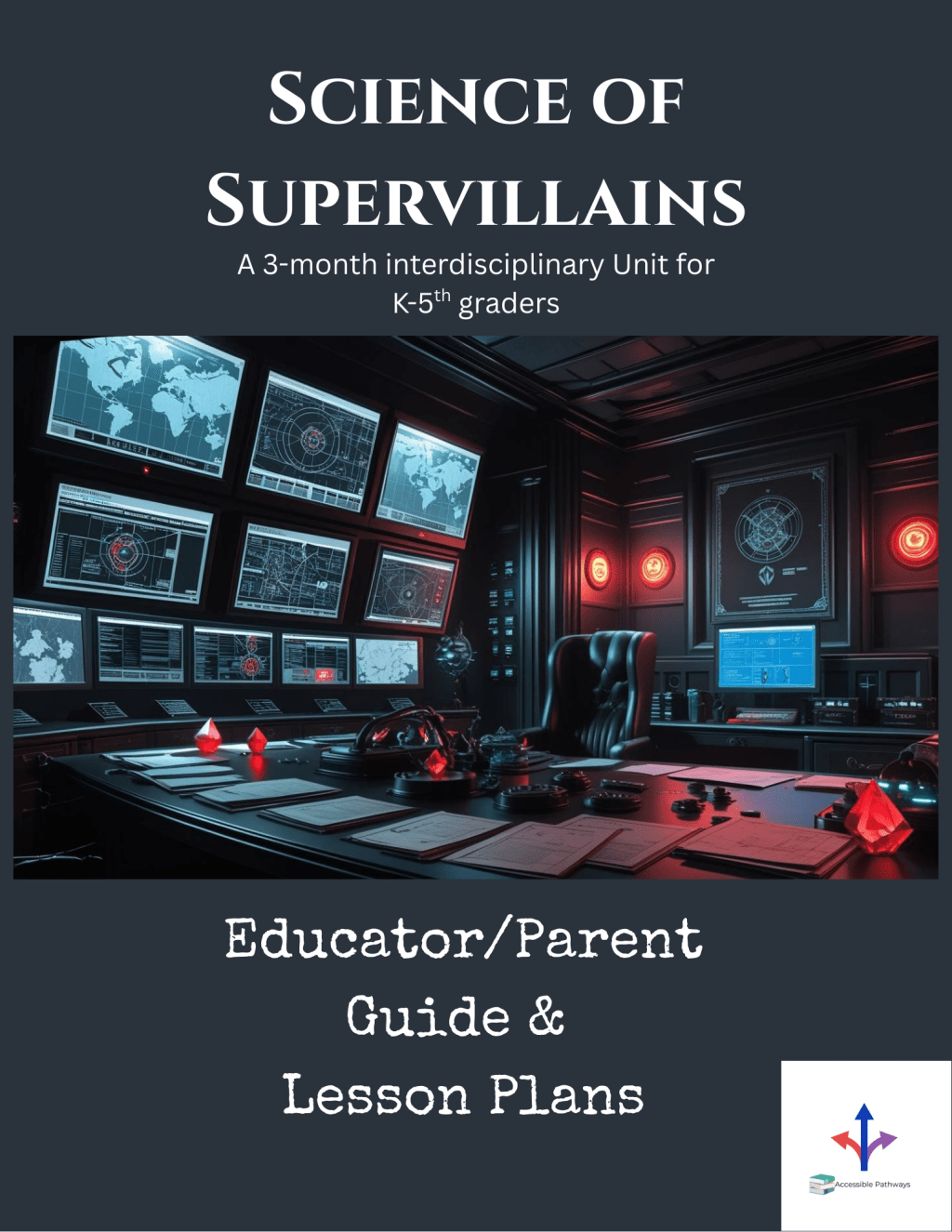
Fun science curriculum kids love starts with imagination and engagement. Instead of teaching scientific concepts in isolation, why not connect them to the thrilling world of supervillains? These characters may be fictional, but their gadgets, experiments, and outrageous plans can spark curiosity and open the door to real scientific learning.
Why Supervillains Work in Science Education
Supervillains are larger-than-life problem solvers (with questionable morals, of course). They push boundaries, bend the rules, and rely on science and technology to achieve their goals. This makes them perfect for exploring real topics like:
- Physics: How would an anti-gravity device really work?
- Chemistry: What’s happening when a villain brews a bubbling, glowing formula?
- Biology: Could genetic mutations or “super serums” happen in real life?
By asking, “Could this science actually work?” students get to practice critical thinking while having fun, a delightful combination that not only engages their curiosity but also encourages a deeper understanding of scientific principles. This query sparks discussions and debates among peers, allowing them to evaluate hypotheses, analyze data, and explore various perspectives.
Such interactive learning experiences promote collaboration and creativity, making science not just an academic subject but a thrilling superhero adventure that students can enjoy together or with their family members!
Making Science Lessons Memorable
A fun science curriculum kids love should do more than cover standards—it should inspire creativity and stick in students’ minds. When learners analyze a villain’s invention or lair, they’re engaging in a dynamic process that involves applying the scientific method, testing ideas, and debating possibilities. This approach encourages them to ask questions, formulate hypotheses, and seek evidence, thereby deepening their understanding of scientific principles. They’re not just learning facts; they’re learning how to think like scientists, fostering critical thinking skills that are essential in today’s world.
By immersing students in imaginative scenarios, we ignite their curiosity and encourage them to explore the fascinating interplay between science and storytelling, ultimately making the subject more relatable and memorable.
Bringing It Into Your Classroom or Homeschool
Here are a few ways to make supervillains part of your science curriculum:
- Case Studies: Take a famous villain gadget (like a freeze ray) and break down what kind of energy transfer it would require.
- Debates: Ask students to argue whether a villain’s plan could actually work, using evidence from real science.
- Design Challenges: Have students create their own “supervillain invention” and explain the science behind it.
Why learners will love it-
K-5th graders thrive on storytelling, humor, and challenge. A supervillain-themed lesson feels more like play, but behind the scenes, it’s reinforcing essential concepts in physics, chemistry, and biology. That’s the balance of a truly fun science curriculum: engaging themes + rigorous thinking.
Our Unit For a Fun Science Curriculum Kids Love
Our new Science of Supervillains unit is perfect for K-5th grade children to learn science in a way that is fun for them. It is very story-rich and engaging like we ensure all of our units are.
The learners will first get introduced to the unit’s character guide (every unit has one), Jeremy. He is a elementary school-aged boy who is training to be a supervillain. In an accident, he lost one of his arms and wears a bionic one.
After the introduction to Jeremy, the first month and first week’s overview pages are up next which kicks off the whole unit! Each week and day have themes related to all of the supervillains that are in comics and movies and the science behind certain aspects of them. It is quite science-heavy but still includes the other subjects so that children are getting a well-rounded, comprehensive education.
In Conclusion
Creating or finding a fun science curriculum kids love is very beneficial, as it not only engages their curiosity and enthusiasm for learning but also fosters a deeper understanding of scientific concepts through hands-on activities and interactive experiments. By incorporating elements like challenges, crafts, and real-life applications, the curriculum can turn complex topics into enjoyable experiences that ignite a passion for discovery.
If you’d like to bring this idea into your homeschool or classroom, check out our Science of Supervillains unit, designed to make science both fun and deeply meaningful for K-5th grade learners.






 Accessible Pathways