
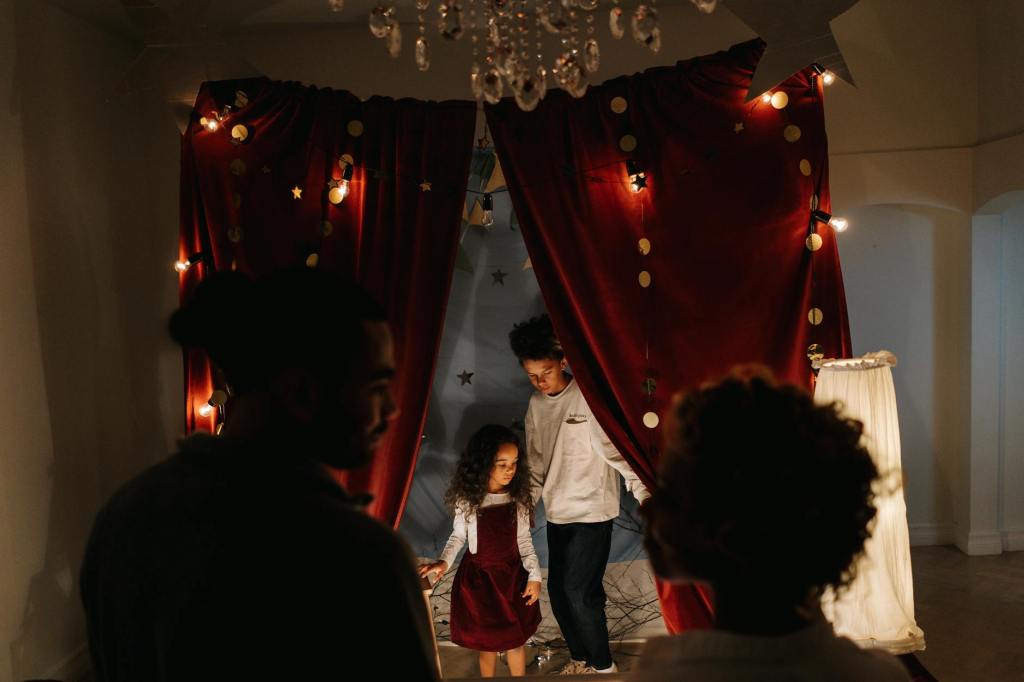
Theater-based learning and film education can be very beneficial to all children, but especially those that are neurodiverse. This is because this kind of education has the creative and hands-on activities that many children do well with.
Engaging in the exciting world of acting, role-playing, storytelling and scriptwriting leads to neurodiverse children strengthening and gaining skills as well as building confidence. It is because of this that we will be offering a three-week unit called, Stage & Screen which provides these benefits.
In this post, the specific benefits of an education in theater and film as well as more information on our curriculum unit will be discussed.
Why Theater-Based Learning and Film Education, Matters
Drama and film have long been powerful tools in education, providing students with engaging, interactive ways to learn. Through storytelling, role-playing, and visual media, students can develop critical thinking, creativity, and communication skills. Theater helps children express emotions, build confidence, and work collaboratively, while film provides a unique way to experience history, literature, and science.
Incorporating drama and film into education also enhances comprehension and retention. Studies show that students are more likely to remember information when they actively participate in it. Whether reenacting historical events, performing adapted versions of classic literature, or analyzing a film’s themes, students gain deeper insights into the subject matter. This hands-on approach is especially beneficial for neurodivergent learners, who may thrive in more interactive and visual learning environments.
A Historical Look at Theater and Film in Education
Theater has been a part of education for centuries. In Ancient Greece, students learned philosophy and ethics through dramatic performances, while in the Middle Ages, morality plays were used to teach religious and societal values. Shakespeare’s plays became a staple in schools, not just for their literary merit but also for their ability to help students explore human nature and complex themes.
With the rise of film in the 20th century, educators quickly saw its potential as a teaching tool. Early educational films helped students visualize historical events, scientific concepts, and literary adaptations, making complex ideas more accessible. Over time, film became an integral part of classrooms, enhancing traditional learning with immersive storytelling.
Today, the combination of theater and film in education continues to evolve, integrating modern technology and interactive techniques to better engage students.
Drama and Film for Neurodiverse Learners
Theater and film-based education can be particularly effective for neurodiverse learners, offering the aforementioned flexible, multisensory experiences. Here are the specific benefits of this type of learning:
- Making Connections With Multi-Sensory Learning – Acting, movement, and visual storytelling engage children in different ways. This can help struggling learners connect with subject matter better.
- Boosting Communication Skills – Helps kids practice expressive language, social cues, and confidence.
- Story Structure & Sequencing – Watching or performing stories can reinforce literacy and comprehension.
- Self-Expression & Emotional Regulation – Performing can help kids channel emotions in a positive way.
Here are the ways in which theater-based learning and film education can help children with specific neurodiverse conditions:
- Autistic Learners: Role-playing allows autistic students to practice social interactions, recognize emotions, and develop verbal and non-verbal communication skills in a structured setting.
- ADHD: Movement-based and engaging activities, such as acting out scenes or participating in improv, can help improve focus and attention while providing an outlet for excess energy.
- Dyslexia: Watching and performing stories helps with comprehension, while script-based activities can reinforce reading skills in a low-pressure, enjoyable way.
- Dyscalculia: Using storytelling and visual representation in theater and film can make abstract math concepts more concrete and understandable.
- Dysgraphia: Scriptwriting and storytelling activities provide opportunities to practice writing in a more creative and structured way, reducing the stress of traditional handwriting tasks.
By allowing students to learn in a dynamic, hands-on way, theater-based learning and film can bridge gaps in traditional education and provide neurodiverse learners with meaningful, engaging experiences tailored to their strengths.
Our Stage & Screen unit (coming soon!)
We are excited to soon be offering Stage & Screen! Designed for neurodiverse-learners in grades K-5, this three-week, comprehensive curriculum unit provides theater-based learning and an education in film. As with our other units, the core academic subjects are all integrated.
From acting warm-ups to scriptwriting, from exploring the history of theater to analyzing films, Stage & Screen helps children build confidence, creativity, and communication skills. Each lesson includes structured activities, ensuring an engaging and accessible experience for all students.
The academics go along with the themes of the day and week. When it comes to the challenge levels of the mathematics and language arts, there are three different grade groupings. These are K-1st, 2nd-3rd and 4th-5th grade. You (or your child!) can pick the academic level they are at and have them complete the tasks listed. For a challenge, you can also have them try to do the work that is a level up.
Whether your child loves stepping into the spotlight or working behind the scenes, this unit encourages self-expression and critical thinking in a fun and dynamic way. Get ready to discover how drama and film can be powerful tools for learning, growth, and imagination!
Other Theater-Based Education Programs
There are wonderful education programs that use theater and drama as a tool for learning, skill building and self-expression. The following are some of the more well known ones:
1. Shakespeare & Company’s Education Program–This program helps students engage with Shakespeare’s works through performance-based learning. By acting out scenes and exploring the language physically, students gain a deeper understanding of literature and history.
2. Drama-Based Instruction (DBI)–DBI is a teaching approach that integrates drama techniques (role-playing, improvisation, storytelling) into regular subjects like history, science, and language arts. Schools and universities, such as The University of Texas at Austin, have research-based programs dedicated to DBI.
3. https://www.nationaltheatre.org.uk/about-us/educational-projects/. National Theatre’s Learning Program (UK)-The National Theatre in the UK offers workshops, digital resources, and live performances designed to make theater education accessible to students and teachers worldwide.
4. The Educational Theatre Association (EdTA) & International Thespian Society (ITS)-EdTA promotes theater education in schools and supports student involvement in drama through ITS, a national honor society for student performers and theater enthusiasts.
5. Wolf Trap Institute for Early Learning Through the Arts–This program uses drama, music, and movement to enhance early childhood education, helping young learners develop literacy and problem-solving skills through play-based theater activities.
In Conclusion
By engaging in activities such as acting, role-playing, and storytelling, neurodiverse children can enhance their communication skills and build confidence in a supportive environment. Moreover, theater-based learning and film education allows these children to explore diverse narratives and characters, helping them develop empathy and understanding for different perspectives.
Do you have any experience using theater and film for learning with your child (or children)? Let me know in the comments. Also, do you want to know when our Stage & Screen curriculum unit will be available to purchase? Check back on our store page for updates!






 Accessible Pathways